داڕێژەر
1959
بەغدا
He went to work in Baghdad with Xala Hamza, and with Mam Jalal began the patient assembly of Komalla. When the founders debated whether theirs was an Iraqi movement or a Kurdish one, Shahab held the line that would define it: unless Kurdistan was free, Iraq could not be liberated. He debated fiercely, won the argument, and still put the question to a member referendum, ready to step back if the majority chose otherwise.
1970
کۆمەڵە
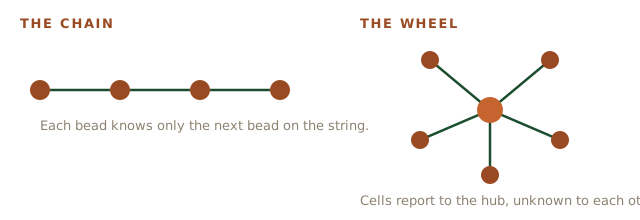
Komallay Ranjdarani Kurdistan, the Toilers' League, was founded. His reach, comrades said, no one else could match: Baghdad, Kirkuk, Badinan, Xanaqin, Slemani. He lectured the cells on ideology and world politics, supervised their problems, and held the movement's two halves together: naw shar, the underground of the towns, raising funds, moving messages, hiding the wounded; and daraway shar, the fighters outside.
∞
کتێبفرۆشییەکە
On Saadoun Street he opened Fkri Jdeed, the New Thought library, with thirty dinars borrowed from Nazanin Khan. The regime, busy purging its own ranks, never saw it for what it was: a lighthouse for leftist culture and a quiet recruiting hall for intellectuals. Nobody in the movement drew a salary; they lived on the generosity of those around them, and the thirty dinars were never repaid.
None of us had this extensive reach and depth of influence like he did.
Faraidun Abdel Kader
Komalla leadership, imprisoned with him
1974
گەڕانەوە
After about a year in Lebanon with Mam Jalal laying the party's foundations, he came home to prepare the cities. The coming phase, he told the supervisors, demanded one thing above all: a unified frontline and an aligned nation.